One of the most common issues people request help for is their Internet Connection, WiFi or ethernet. Another common issue is bad behavior by MicroSoft Outlook. We'll address these and a few other common issues that are relatively easy to fix.
Notably, the one thing most people needing support with Windows issues did not do is make a Windows Recovery disk, ever. It is imperative that you have a Windows Recovery disk because Windows most always fails at one point or another. We will also cover this topic.
The Microsoft knowledge base is full of help articles for other common issues Windows users encounter. You can generally find help simply by Googling your issue.
Operating System re-installs can get complicated depending on the OS version, whether or not you need to, are able to, get the existing data (your personal files) off your disk first, whether you are upgrading or downgrading, etc, etc. You might want to contact us for help with that if you are completely overwhelmed by the prospect of OSRI (Operating System Re-Install) by yourself.
Another of the most common issues we are seeing recently, in 2017, are the Web Browser Ransomware hacks that lock up your screen suddenly while you are surfing the net and demand you call a phone number for help. DO NOT under any circumstances ever call those phone numbers. I will show you how to get rid of this problem.
Control Panel
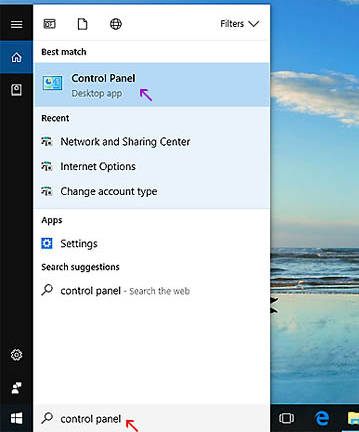
The control panel can be accessed 2 different ways in Windows 10. There is also a settings link in the start menu.
One way of getting to the control panel is by simply typing control panel in the search bar near the bottom left of your screen, just right of the Windows logo start button. A white pane will pop up as you start to type into the search bar and you will see various options as you type, finally narrowing down as your words become more specific.
Once we are inside the control panel we are given several options to choose from. In this example we are going to head to User Accounts and create a Standard (limited rights) user to make accessing the internet safer. A standard user account is much less likely to acquire malware because software cannot install from the standard user account.
Type 'control panel' into the search bar where it says 'Ask me anything' (red arrow). Then, click on Control Panel higher up in the menu (purple arrow).

Click on User Accounts
System Tray
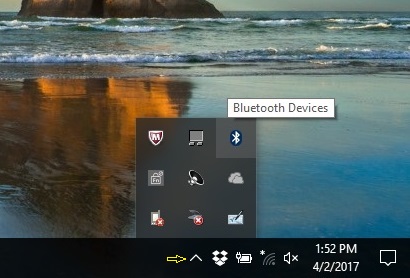
This is your 'system tray'. It contains icons that link to devices or programs on your system. You can access the system tray by clicking the icon on the task bar (yellow arrow).
Command Prompt
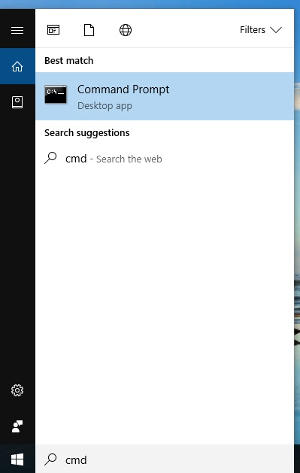
Lets open the Command Prompt by typing 'cmd' into the search bar on your desktop.
The Command Prompt is useful for administrative tasks. We can get status on our internet connections here, for instance.
Type cmd into the search bar where it says 'Ask me anything'. Then, click on Command Prompt higher up in the menu.
Windows Updates
How to turn updates off and on in Windows 10
There's a lot of complaining out there about not having the ability to turn Windows Updates off in Windows 10. This is not true. Although the option to control the updater is no longer available within the main Windows Updates interface, you can still turn updates on and off from inside the control panel, Administrative Tools.
Notice also in the picture below, that there is a search bar within the control panel itself (red arrow). Search here if you can't find system related tools.
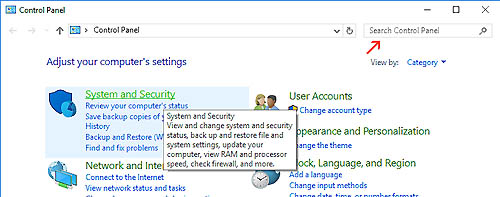
Open the Control Panel, click on 'System and Security'.
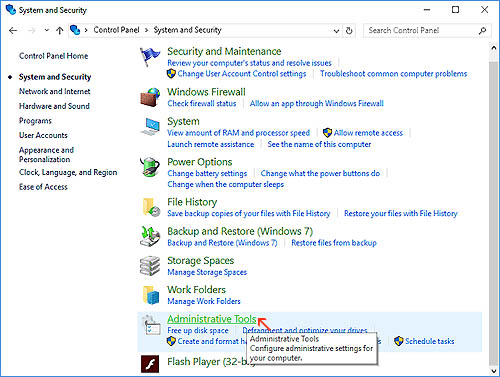
Inside the System and Security window, click on 'Administrative Tools' (red arrow).
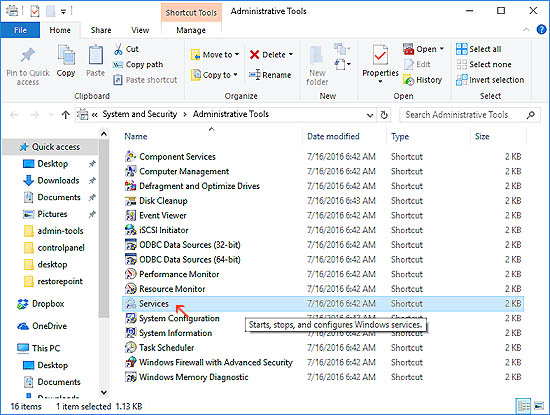
Inside the Administrative Tools window, click on 'Services' (red arrow).

1. Inside the Services window, click on 'Background Intelligent Transfer Service' (red arrow). A window will open for this service.
2. In the newly opened smaller window, click the 'Stop' button (orange arrow).
3. In the dropdown select, choose 'Disabled' (purple arrow).
4. Click Apply (green arrow).
5. Click OK (blue arrow). The smaller window will close.
We are not done yet, continue on to the next steps below.
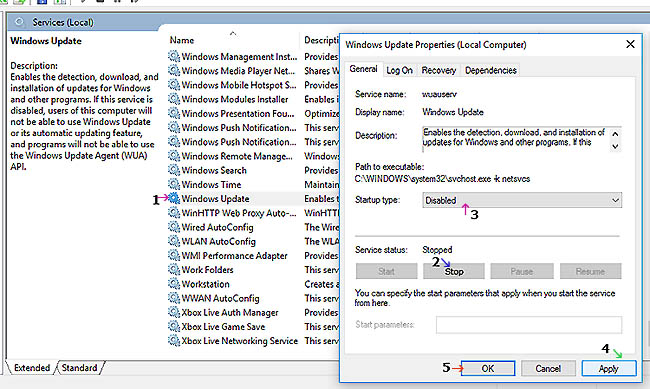
Inside the main Services window again, scroll down alphabetically to Windows Update
1. Click on 'Windows Update' (purple arrow). A window will open for this service.
2. In the newly opened smaller window, click the 'Stop' button (blue arrow).
3. In the dropdown select, choose 'Disabled' (magenta arrow).
4. Click Apply (green arrow).
5. Click OK (red arrow). The smaller window will close.
Now, we are finished. Windows Updates are turned off. To turn them back on, just follow these steps in reverse.
There are a few other items you might want to turn off in services for the sake of security. If you are not using these items, they should be turned off.
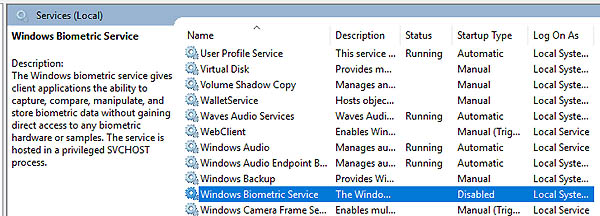
If you are not using facial recognition or a thumb print reader you might consider turning this Biometric Service item off. Just click on it and turn it off like we turned the above items off.

Remote Registry is rarely needed. This is a true security issue. Even if you have a tech remote in to help you, they will be using the onboard registry editor if they need to make changes to the registry.

Unless your system is a floor model, you should turn the Retail Demo Service off.
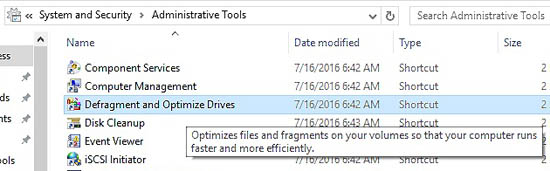
You may have noticed the Defragment and Optimize Drives tool is located inside Administrative Tools. Just as a note for more modern systems, you should NEVER defragment solid state drives. This tool will destroy a solid state drive in a heartbeat.